
Cinematic history built through AI - from script to screen without a studio.
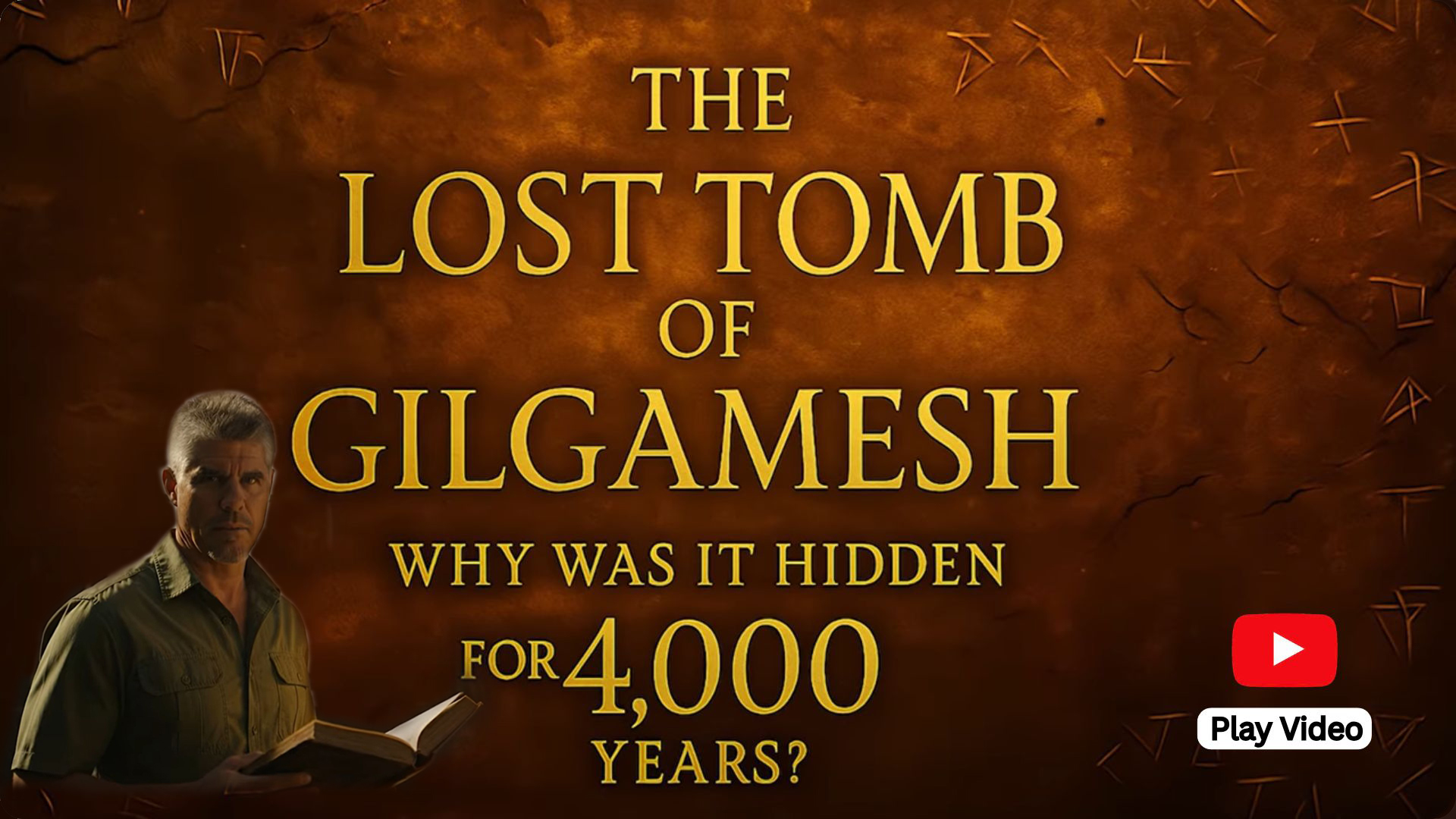
Services Provided
AI-Powered Video Production
From Research to Reenactment
This project demonstrates how we transform historical and biblical concepts into immersive cinematic environments, combining research, scripting, character development, and AI-based production into a single, streamlined workflow.
Every project begins with historical and textual research. We study source material, cultural context, and narrative intent before translating those ideas into visual form. From there, we design each episode with clarity and purpose, ensuring that story, setting, and tone align before any production begins.
Our clients submit high-level bullet points or thematic direction. We handle the rest, delivering:
• Episode guides that structure long-form narratives
• Full scripts shaped for cinematic pacing
• Visual storyboards that map each scene
• Character development grounded in historical reference
• Final cinematic production ready for release
All of this is completed without requiring the client to step into a studio, manage production crews, or oversee technical complexity.
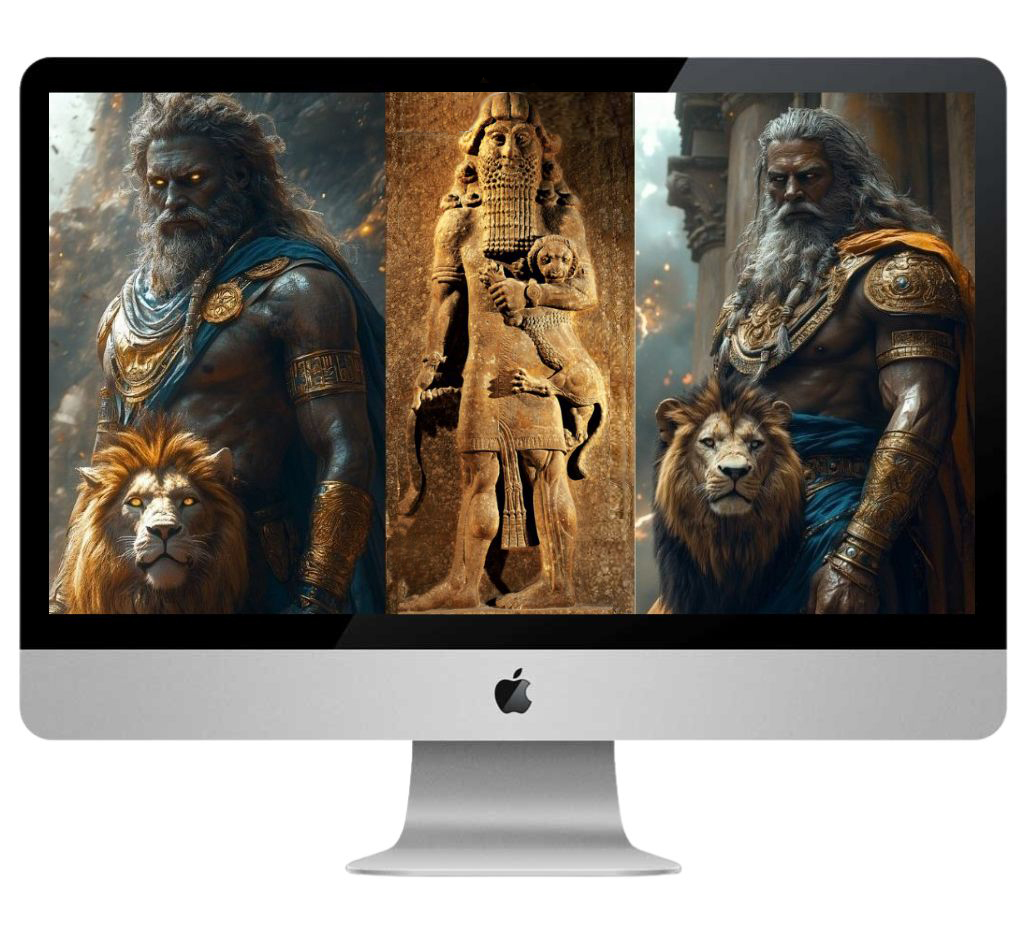
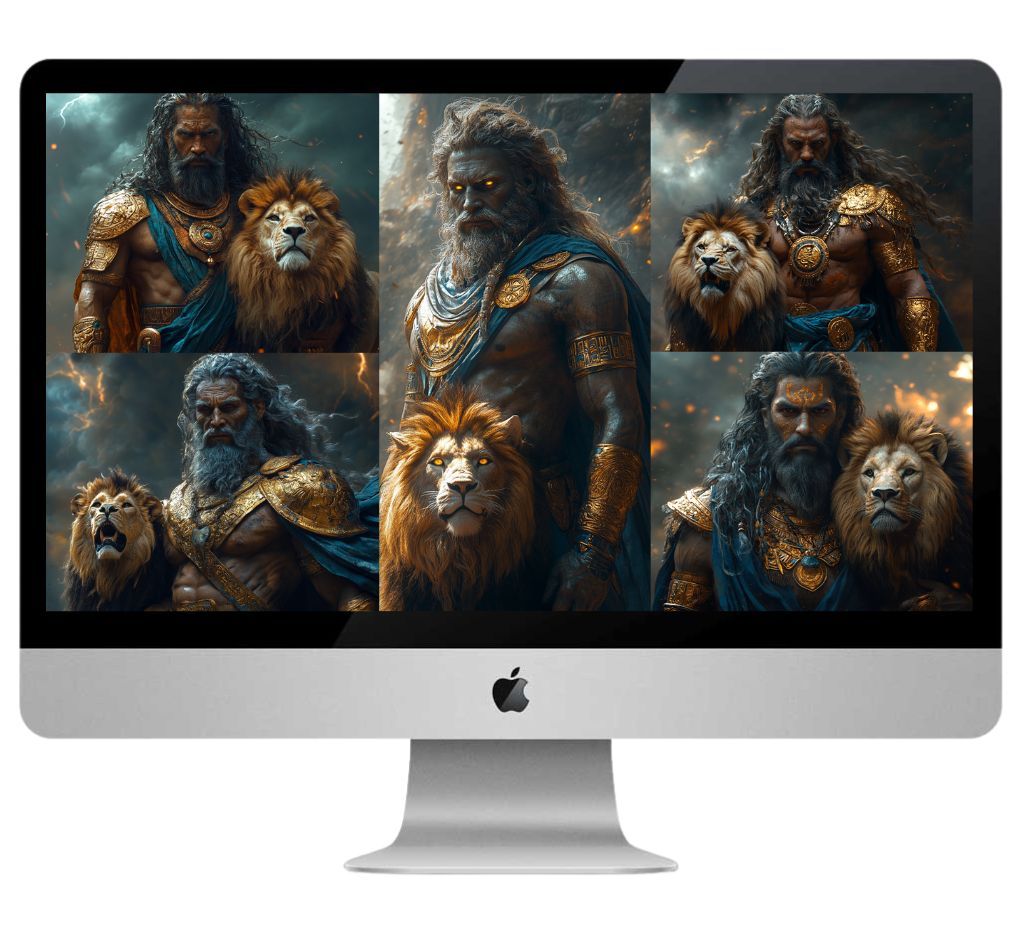
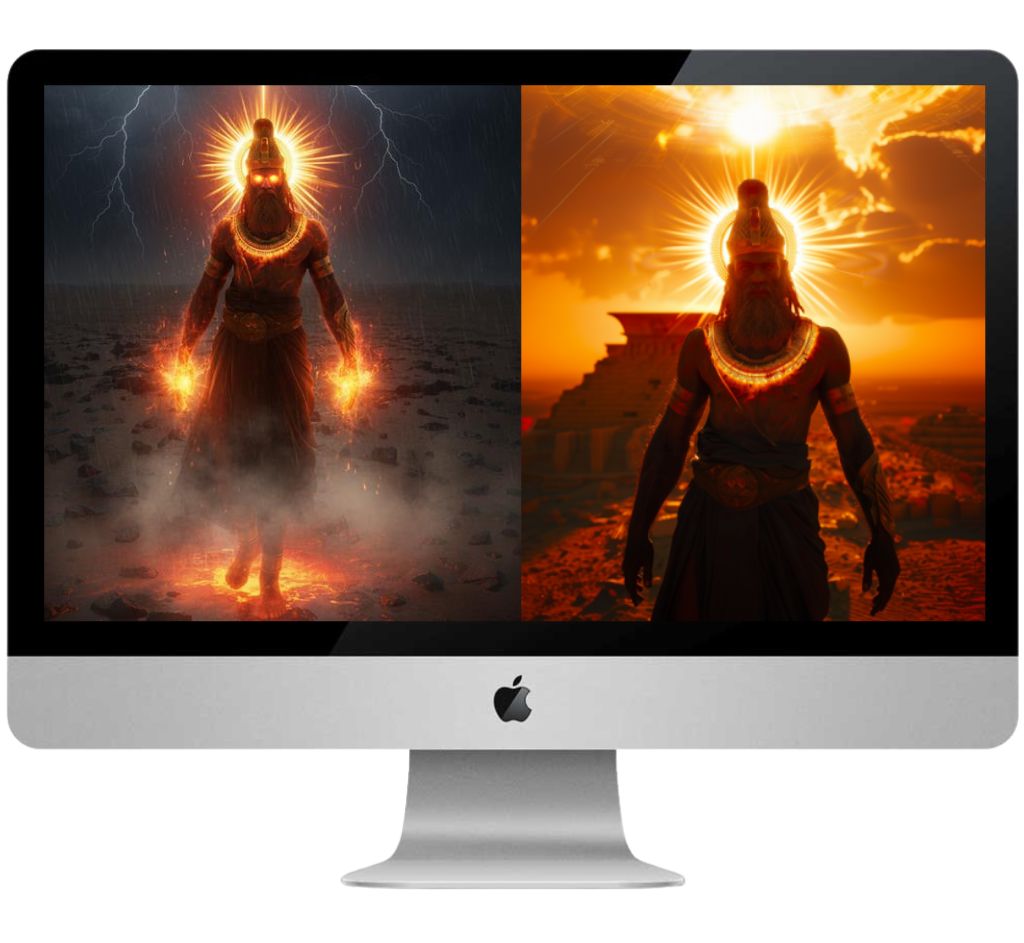
Gilgamesh & Shamash
From Artifact to Character
We begin character development by studying original archaeological forms – statues, reliefs, inscriptions, and iconography – to understand posture, symbolism, and cultural meaning.
From these references, we evolve characters into cinematic presences. Gilgamesh was developed across multiple visual stages, refining posture, facial structure, lighting, costume language, and emotional tone. The lion motif remained central throughout, symbolizing kingship, divine strength, and authority.
Each iteration moves closer to a character that feels alive on screen – not a replica of an artifact, but a believable figure shaped by history and narrative intent.
This same workflow was applied to Shamash, where divine presence was conveyed through layered prompt engineering, controlled lighting, symbolic elements, and cinematic framing to express wisdom, power, and mystery.
Visual Storytelling in Ancient Worlds
Teaching Through Environment
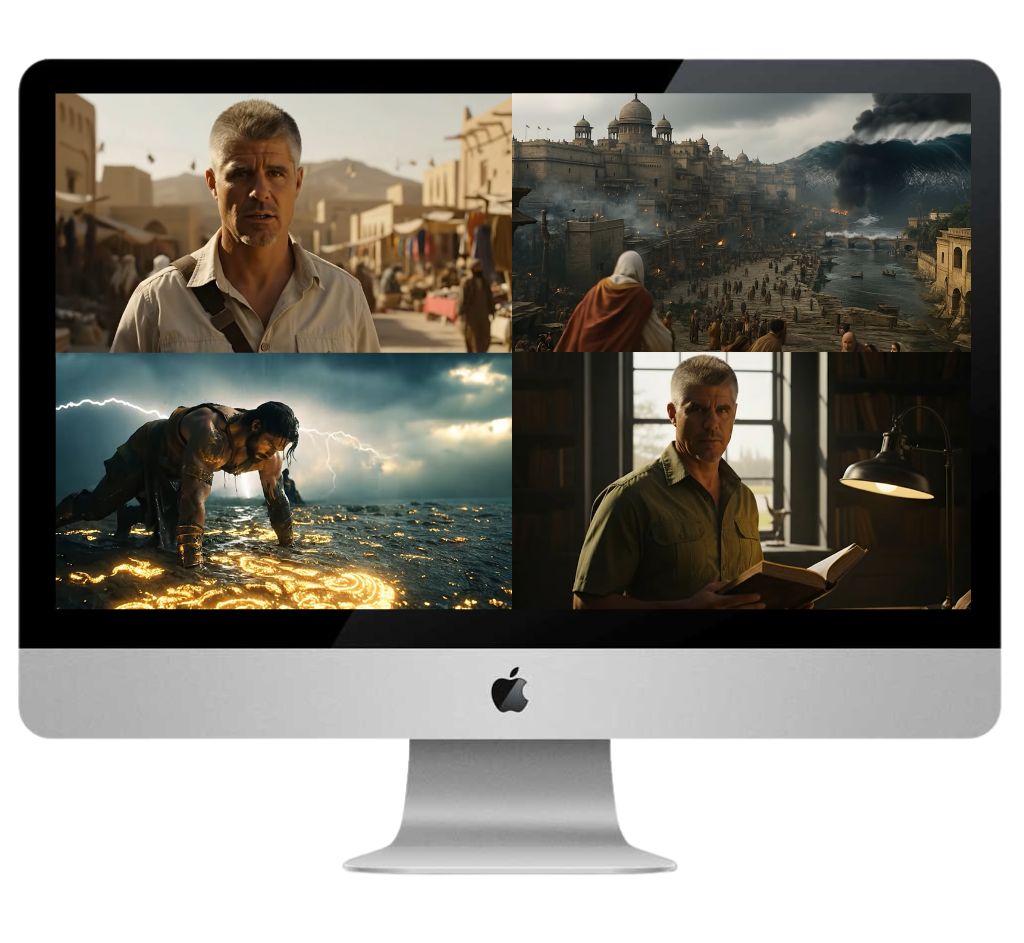
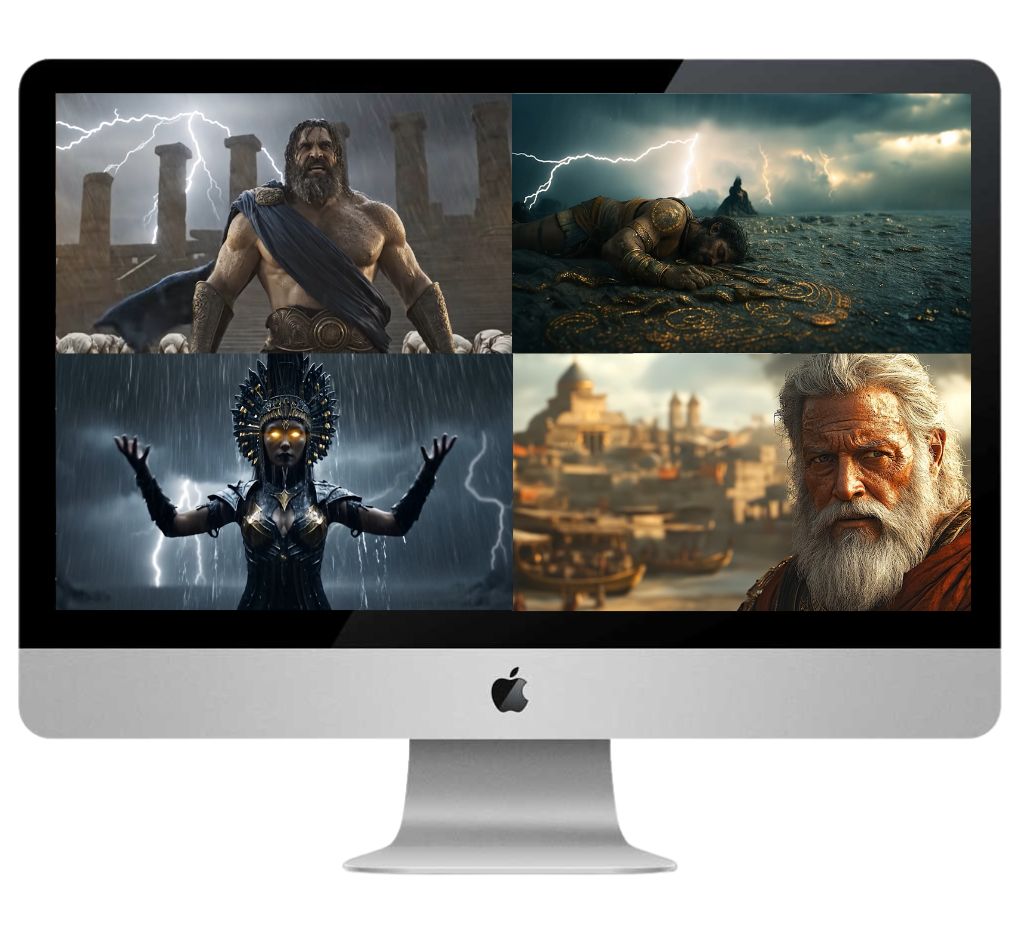
Some passages describe divine authority, judgment, or confrontation that are difficult to visualize from text alone. By placing the guide inside historically grounded environments – Pharaoh’s court, ancient Uruk, or the isolation of imprisonment – Scripture and history become spatial experiences rather than abstract ideas.
Environment is not background decoration; it is narrative structure. Scale, architecture, light, and geography work together to establish emotional context before a word is spoken. Viewers understand power, tension, and consequence intuitively because they are standing inside the moment.
These scenes are not spectacle-driven. They exist to provide context, scale, and emotional grounding so teaching and explanation land with clarity and weight.
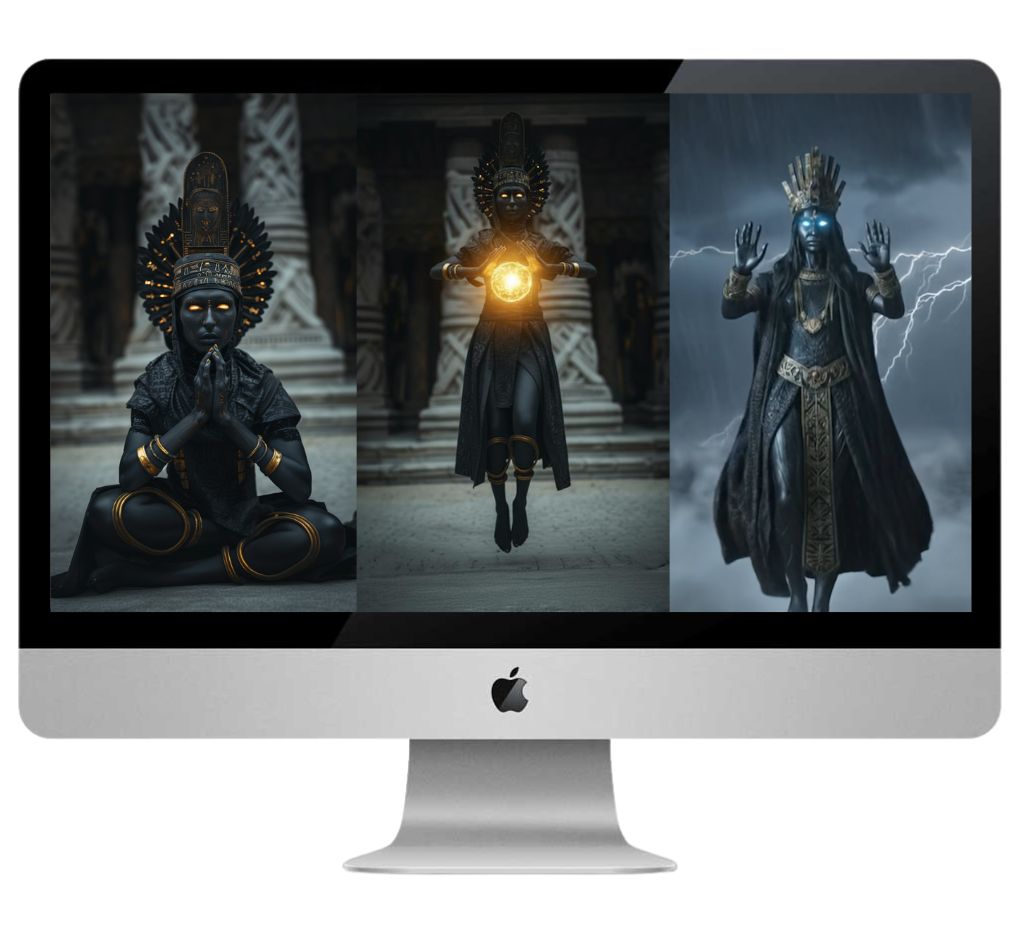
Goddess Development
Goddess Visualization
We developed Mesopotamian goddesses through multiple visual states – exploring how light, gesture, posture, and costume communicate divinity without relying on exposition.
Each iteration tested different symbolic expressions of power and presence, allowing us to refine how mythological figures translate emotionally on screen. The result is a character that feels intentional, grounded, and resonant rather than ornamental.
This process demonstrates how mythological figures can be shaped into screen-ready characters with depth, restraint, and visual coherence – not static artwork, but narrative participants.
Production Workflow
AI-Driven Production Pipeline
Our production workflow is designed to remove friction while preserving creative control and quality.
It includes:
• Script writing and narrative structuring
• Visual storyboarding and shot planning
• Character development and refinement
• Environment creation and worldbuilding
• AI cloning of voice and likeness (when applicable)
• Final cinematic assembly and delivery
This pipeline allows clients to review scripts, approve direction, and refine tone before scenes are produced. The result is a collaborative process that maintains clarity without requiring studio time, physical sets, or traditional production overhead.
History Channel Client Case Study
History Channel – AI Episode Production
For History Channel client Jim Vieira, we served as both creative and production partner. We:
• Wrote eight episode scripts
• Produced one full episode using 100% AI-generated media
• Built cinematic scenes using: Sora 2, Runway, Google Veo 3, Higgsfield, HeyGen, ElevenLabs
In addition to content creation, we handled voice cloning, AI-generated on-screen presence, and coordination between creative and technical teams – demonstrating how large-scale historical content can be produced efficiently with modern AI tools.
Cinematic History Without a Studio
This approach levels the playing field. High-production historical storytelling – once limited to major television studios – is now accessible to authors, educators, and creators.
By combining research-driven storytelling with AI-powered production, we remove traditional barriers while elevating visual quality and narrative depth. From concept to finished episode, every step is built to support clarity, scale, and consistency without unnecessary friction.
The result is cinematic history that is intentional, repeatable, and ready for modern audiences.
SKILLS & TECHNOLOGIES
WHAT CLIENTS SAY

“Greg and team optimized the website for StormChamber. Since the SEO, we have jumped to the top of the search engines and Greg has helped us stay there. Not only is Greg’s team good at SEO, but they also have great web design team. Check out the website they did for us: www.stormchambers.com”

“Greg Maestro has proven to me time and again that he is a strong vendor partner. His ability to harness experts in design and manage them to provide you with the results that are beyond expectations is amazing. At NeighborWorks America, it is not uncommon to have projects with short turn times and he has…
“DeviateMedia has been serving Solutions Developers for four years and they are a trusted vendor that is able to deliver under aggressive schedules. DeviateMedia has helped us with every aspect of our branding, including our logos, web design, advertising, marketing and trade show collateral. Greg and his team are fun to work with, value conscious…

“Since we participated in Deviate Media’s search engine program we have seen an increase in website traffic that actually converted into sales. Before Deviate Media we weren’t ranking well in the search engines, now we’re on the 1st page! They did a great job re-designing our website, corporate ID, trade show booth and brochures. We’re…

“We just wanted to thank you for your knowledge and assistance in the selection and redesign of our website. You listened to what we wanted and helped us to achieve that goal. It’s been a pleasure having my staff work with you.”

“Deviate Media accomplished in five days what we had been trying to do for the last several years. We improved our web image at a fraction of the time and cost. We’ll certainly be using Deviate Media for future projects.”

“Greg has been a strong asset to the Sage Partner Marketing program, providing innovative, cost-effective web solutions for the Sage partners. I appreciate Greg’s insight into developing new products that fit the partners’ marketing needs – to build awareness and generate leads. He has helped partners of all sizes- from national partners to one-man-shops. I…

“We’re happy to promote Deviate Media, they do great work! We’ve been doing business with them for over four years and continue to rely on them for our print, web and presentation needs. We were awarded a contract from NASA that Deviate Media helped us win. We’ve recommended their services to many of our clients…

“Deviate Media delivered a final product that far exceeded our expectations. They thought of things that never even crossed our mind in the planning process. I would highly recommend them to any company considering a new website design.”

“The staff at Deviate Media were easy to work with and went the extra mile for us. They worked overtime to help us launch a website in time for a seminar. We’re very happy with our new website and will be using Deviate Media for our search engine optimization efforts.”
“Deviate Media was the first Search Engine Optimization Preferred Vendor and was invited to present at Sage’s annual channel partner conference on SEO and website design. He is great to work with and puts his customers first. I’ve hired Deviate Media for several website projects and highly recommend Greg. “

“We have received such a positive response to our new web site, I wanted to thank everyone at Deviate Media for doing a great job! We are now projecting the true image of our company, not the misrepresentation we had previously. Our sales have increased since our launch due to our new creditable and professional…
“Greg and his company did work for me and for many Sage Business Partners during the 3 years I worked with him. He specialized in innovative online marketing solutions for websites and I frequently called upon him as an expert speaker at workshops to teach Sage Business Partners how they could improve their websites. Many…
Deviate Media offered excellent turnkey website solutions for Sage Software business partners. Greg is professional, accommodating and timely. He certainly added tremendous value to the Sage Turnkey Program. I would be delighted to partner with Greg in the future due to his attention to detail and quality work.

“Everyone at Deviate Media has been a pleasure to work with. Their team has helped us achieve visibility in the search engines, increase sales and gain brand awareness. We’ve been working with Greg and his designers for almost six years now and they are our design and marketing team. They’ve done everything from our tradeshow…
Have a project in mind? Let’s get to work.
Complete our form and one of our specialist will schedule a call to discuss how to achieve your goals.